NFL Continues Battle with Concussions
The scariest injury in football isn’t a torn anterior cruciate ligament or a ruptured Achilles. Instead, it is an injury that is not always even seen. There is nothing in football that can compare to a concussion.
A concussion occurs when the brain moves rapidly back and forth in the skull, usually after a hit or collision. In football, there are hits every single play, bringing the risk of a concussion even higher. Sometimes it is clear a concussion has occurred, such as when Miami Dolphins quarterback Tua Tagovailoa was left twitching on the field in Week 4 of the 2022 season. Other times it is not as clear and a player may remain in the game.
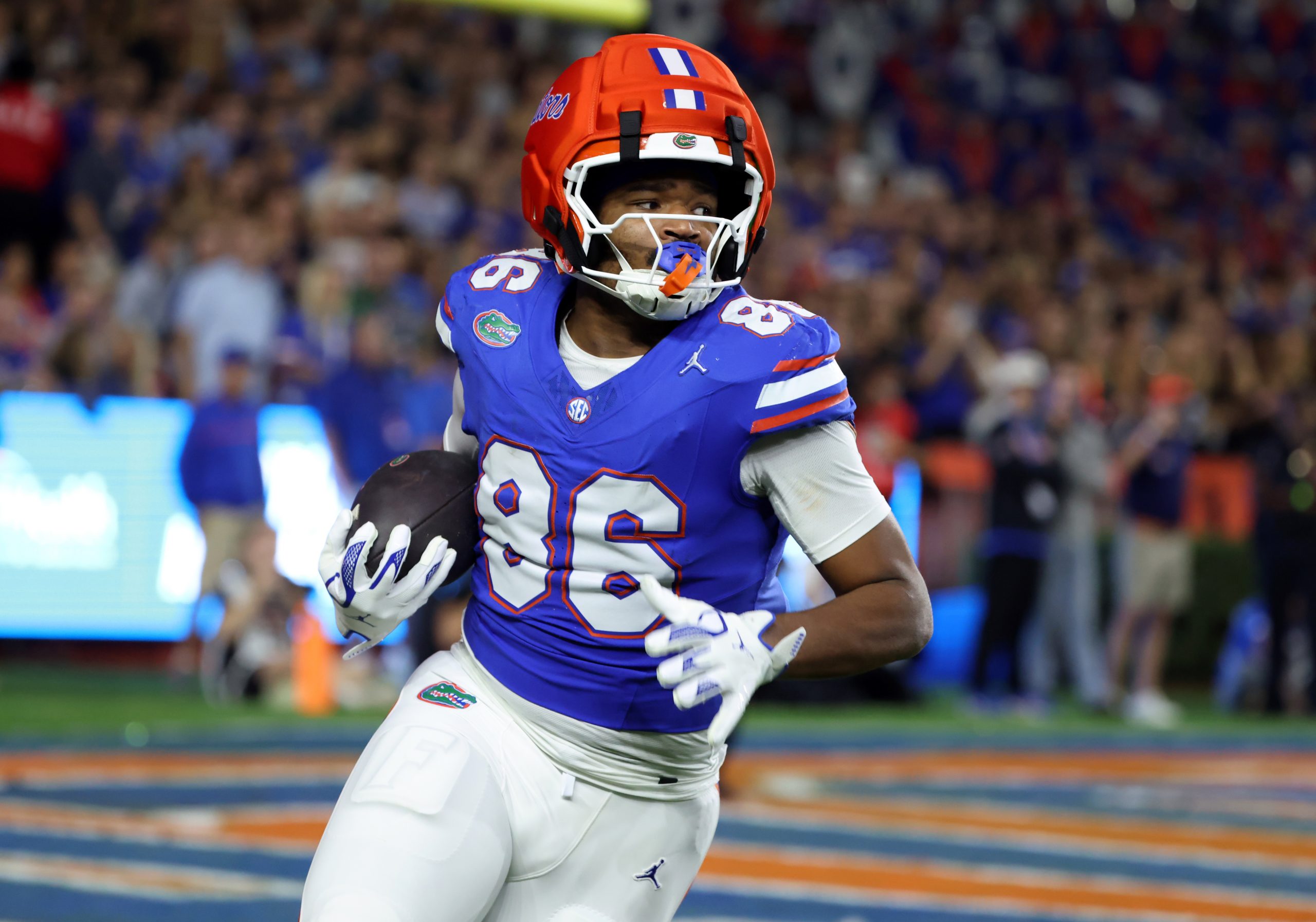
The NFL has begun to be more proactive when it comes to concussions. It has implemented things such as the guardian cap, which is a protective cover over the helmet, as well as changing kickoff rules to avoid unnecessary high speed collisions.
So far, it is working. The NFL reported a drop in total concussions in 2024, going from 219 in 2023 to just 182 in 2024, per Kevin Seifert of ESPN. The biggest change came from regular-season games, where the concussion numbers went from 152 to 129.
I had the opportunity to talk with former offensive lineman and current high school football coach at Land O’ Lakes high school Dan Goodspeed, as well as Ben Fisher, an intern athletic trainer at the University of Florida, to learn more about concussions in football. Goodspeed was a member of the 2003 Super Bowl winning Tampa Bay Buccaneers.
Rub Some Dirt on it
Goodspeed played offensive line in the NFL from 2001-2005 and spent time in the CFL and XFL up until 2012. “It was a very different time for concussions,” he said.
While Goodspeed was knocked out on the field multiple times, there was not a concussion diagnosis that followed. Instead, he would receive smelling salts to wake up and be sent back out.
There was the expectation that a player would be on the field, and, if you were missing time for a concussion that meant your job was in jeopardy.
As an offensive lineman, Goodspeed had more of his head injuries coming from getting kneed in a pile rather than hitting the ground. He theorized that quarterbacks have a higher concussion rate in the regular season because they are not taking hits in practice like everyone else.
When it comes to why the concussions rate is higher in preseason, especially preseason practices, Goodspeed pointed out those practices are harder, as well as the fact that there are young players who want to earn a roster spot. These young players are hitting like it is a real game to show they have what it takes, while also being more reckless to do everything they can to achieve the dream of playing in the NFL.
Guardian Caps
All levels of football have begun to implement the guardian caps, and the data is supporting their continued use. Goodspeed, who still receives information from the NFL Players Association, passed along that the data given shows “it (guardian caps) does help.”
Goodspeed has all of his high school players wear the guardian caps. He wants the parents of his players to know that he has the safety of players in the forefront of his mind, and is taking every step to keep them healthy.
At the high school level players’ brains are still developing, which makes a concussion have even worse effects. The guardian caps are a step to mitigate the concern.
The Gators are also taking concussions seriously. While tight end Tony Livingston became the first UF player to wear the guardian cap in game, Fisher reported that all players wear them in practice. Working to decrease the risk of a concussion in practice is an easy step many college programs are taking.
In the NFL, players such as Green Bay Packers wide receiver Romeo Doubs wear the guardian cap in the game. The response by the fans was interesting. When Doubs first wore the cap, fans on social media had a field day making fun of the way it looked. But now, it is talked about less and less, which is a win for all the guardian cap supporters.
You Have a Concussion, Now What?
Concussion protocol has taken strides in the direction of player safety. The one thing that remains constant, and will likely never change, is that concussion treatment depends on a strong relationship between player and coaching staff.
The return from concussion protocol “requires honesty from the athletes” according to Fisher. The medical team cannot see inside the mind of players and know how their head feels. A positive relationship with the coaching staff allows a player to wait until they feel healthy before returning to play.
This is the type of environment Goodspeed has tried to create at Land O’ Lakes. It can be harder at the high school level, where parents are much more involved. Many parents grew up in the same era Goodspeed did, where concussions were not treated as a serious issue.
There are times where the parents will encourage their son to get back on the field, and tell the coach they are healthy when they are not.This is where things such as the concussion test come in. Players at the beginning of the season take the test to generate a baseline score, and then will take the test again if a concussion is suspected. While not perfect, it allows another check on what could be a dangerous head injury.
There are ways the athletes are able to stay in shape while sidelined with a concussion. Players can do activities such as running on the treadmill, and also begin other rehab activities as time goes by, according to Fisher.
Something to watch long term after a concussion is the onset of Chronic Traumatic Encephalopathy, more commonly known as CTE. While it has recently become the subject of jokes across media, it is a serious condition which can be caused by traumatic brain injuries, such as concussions.
CTE is particularly scary because it takes impact years after the head injury has occurred, and cannot be detected until after death. Former NFL players such as Aaron Hernandez, the former UF and New England Patriots tight end, have been found to have had CTE. By taking steps to increase player safety in the realm of concussion, the NFL is hoping to cut down on players being found to have had CTE after death.
The NFL making these choices has had a trickle-down effect to lower levels of football, from college to high school and beyond. The NFL’s continued commitment to combatting concussions is admirable, and to look back at how far it has come since the early 2000s gives hope to the future stars.
Category: College Football, Football, Former Gators, Gators Football, NFL, Tampa Bay Buccaneers