ACL Injuries Are Increasing in Girls Sports. Here’s Why.
It can happen in an instant.
A foot is planted and then twists. It could happen during a contact sport after a tackle, or from an awkward landing after a jump. In either case, the ligament in the knee is unable to withstand the force of the abnormal movement and tears.
Some people hear a pop. Others just feel the sharp pain before it begins to swell.
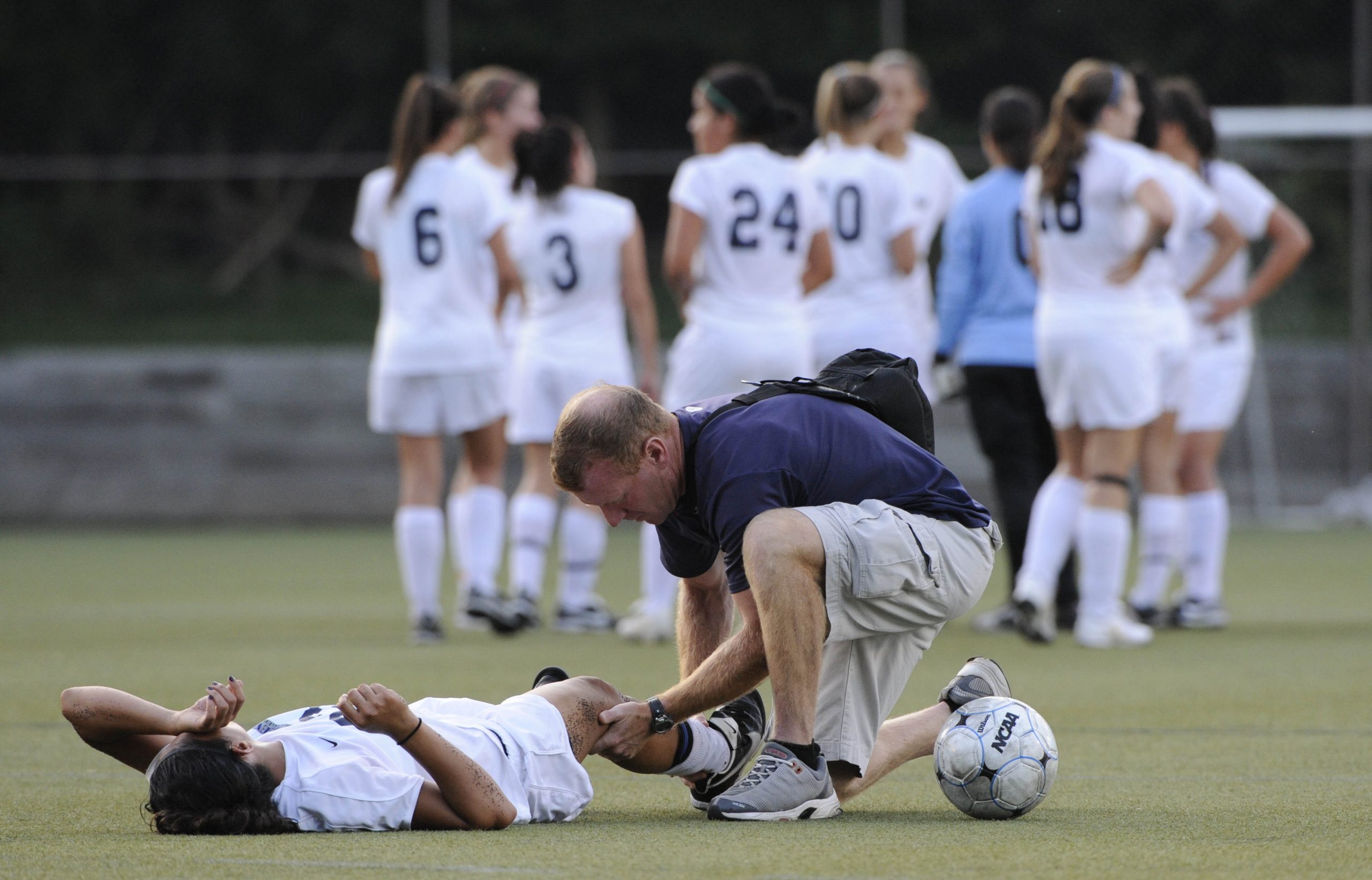
An anterior cruciate ligament tear is one of the most devastating injuries an athlete can suffer. The recovery process is often long and tedious — and research suggests that the most vulnerable population is teenage women.
In the last 15 years, the rate of injury within girls sports rose 32.3% while the rate of injury for boys increased 14.5%.
Girls who play sports that require frequent cutting and landing movements suffer ACL tears at the highest rates, with soccer having the highest rate of injury with 13.3 per 100,000 exposures, which includes all practices and games, according to the Aspen Institute.
The recovery timeline varies, but the process itself is pretty standard for most athletes, according to UF professor and orthopaedic surgeon Dr. Kevin Farmer.
Depending on the nature of the injury, patients undergo surgery and then begin physical therapy immediately. For a complete tear, it often takes eight to nine months for athletes to return to their sport, but returning to contact sports like soccer takes longer.
Not only are young female athletes more likely to tear their ACLs in comparison to their male counterparts, but they are at a higher risk of reinjury. One reason for this is that there is a difference in how fast hamstring firing, or the contraction of hamstring muscles, happens. For girls, their hamstrings typically fire just a millisecond slower.
“That’s enough to give you a little bit less protection of the ACL, and so training those muscles to fire appropriately and fire correctly can decrease the risk of injury and reinjury,” Farmer said.
A priority in the recovery process is to implement practices that help reduce the risk of reinjury. Athletes have a 10% chance of re-tearing the ACL, Farmer said.
Luckily, there is a way to reduce the likelihood of this injury: neuromuscular training. Neuromuscular training helps strengthen athletes’ muscles and consists of exercises that teach athletes how to land properly. These exercises can take place during warm-ups and during the offseason, according to UF Health’s chief of sports medicine, Dr. Jason Zaremski.
“You don’t need weights,” Zaremski said. “You just need to know these right exercises and it really helps prioritize safety in the culture in sports, particularly [for] young ladies.”
One neuromuscular training program, the FIFA 11+ program, takes about 20 minutes and uses no equipment. Neuromuscular training also improves performance as a result of improved mechanics, Zaremski added.
However, preventative techniques are not common knowledge, especially at the high school level. Less than a third of young players participate in ACL injury prevention programs, according to the New York Times. The New York Times suggested that people don’t use these programs because they do not know they exist.
It’s important to get awareness out so that young athletes understand the risks and how they can prevent injury, Farmer said.
“Trying to get the word out is something that we’re all trying to do,” Farmer said.
With effective rehab, the vast majority of athletes are able to eventually return to their sport. Still, few athletes return to the same level of play before getting injured. This is often where the mental aspect of the injury kicks in.
Athletes sometimes struggle with rebuilding their confidence. Gainesville-based psychologist Dr. Matt Seitz often sees the self-doubt in his sports psychology patients.
“Trusting your body is not something you just switch back on, it’s something you have to relearn,” Seitz said. “Physically ready and mentally ready are often two very different timelines.”
There are higher rates of mental health problems in injured athletes, including depression and anxiety. This can be associated with the loss of routine or loss of identity that can come along with injury.
In high school, athletes can feel like their lives were disrupted by the injury, especially if they had the goal of being recruited. Many high school athletes increasingly experience anxiety around the recruiting process, Seitz said. The athletes tend to fear the worst possible outcome and fixate on it.
“The involuntary nature of an injury is hard for everyone,” Seitz said.
Another factor in the psychological part of the injury is kinesiophobia. Athletes who deal with kinesiophobia often have a strong fear of reinjury and struggle to trust their own bodies. These athletes can become skeptical of the fact that they are healthy and need to be walked through their insecurities before they feel comfortable enough to return to their sport.
“I think sometimes we’ve got to gaslight our negative voice,” Seitz said. “You have to gaslight your [internal] doubter.”
However, not all athletes struggle with their mental health through the recovery process. And for athletes who do, there are several ways to stay mindful during the process. The recovery process can be an important time for mental growth, Seitz said.
If playing a team sport, athletes are encouraged to stay in contact with their teammates and rely on their support systems. ACL tears are traumatic injuries and it can help to stay sociable.
Seitz also recommends taking things one step at a time by setting small, achievable goals throughout the recovery process. Preserving a sense of routine and structure can also improve mental health substantially.
Athletes can also work on building mindfulness skills while they are sitting out. Activities like visualization, deep breathing, affirmations and positive self talk all have great track records.
“The athletes who do best mentally during injury are the ones who stay engaged, stay structured and feel supported,” Seitz said.
Category: High School Sports, Soccer