No Payday, No Football: Urban Meyer Reveals Program’s Financial Scare
The countdown was not to kickoff, but instead to payday.
Urban Meyer revealed an unnamed college program came within days of missing several million dollars in mid-season player payroll.
If the looming price tag was not paid, it meant one thing: no football.
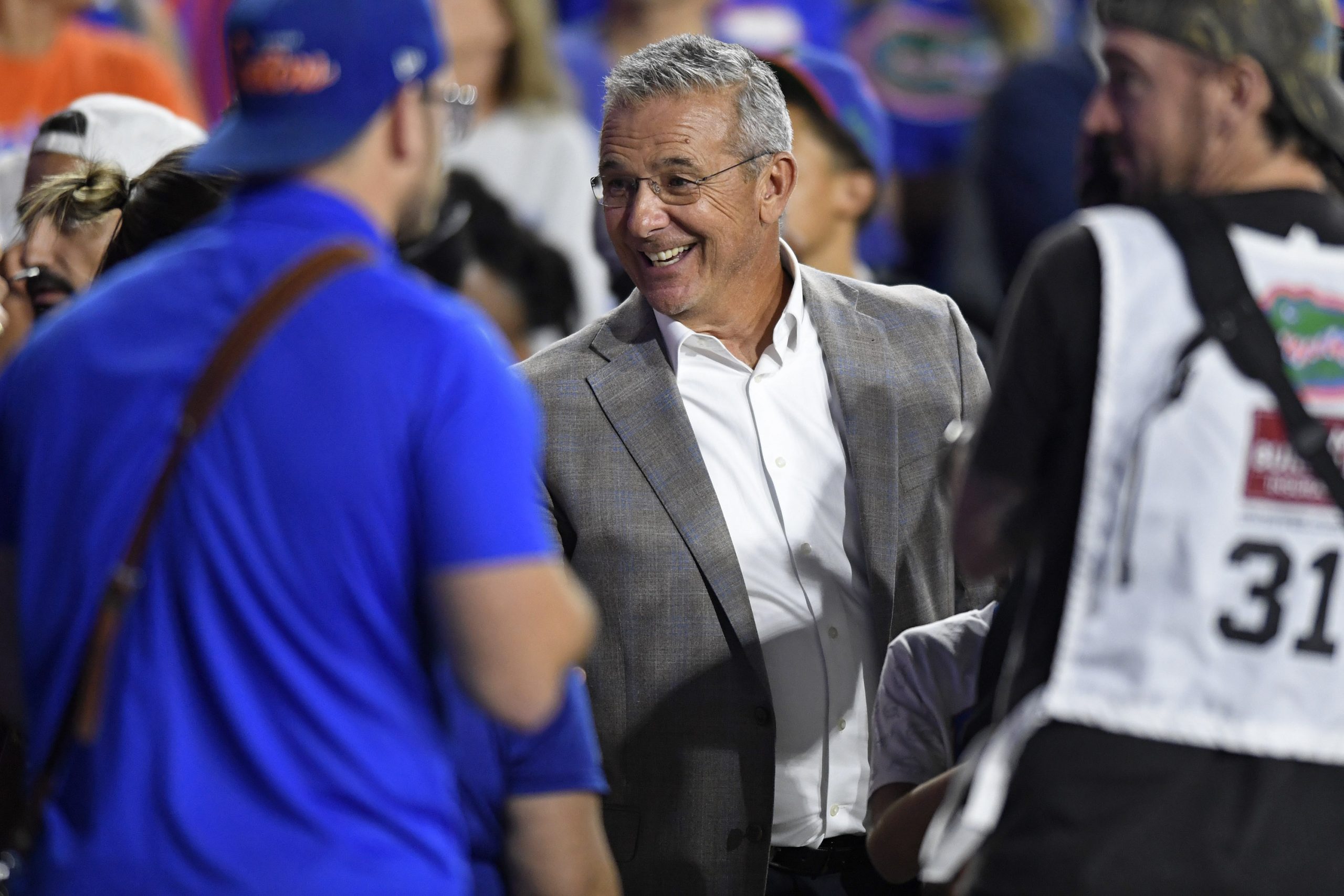
On “The Triple Option” podcast, the former national champion Florida coach and College Football Hall of Fame inductee unveiled how college football’s money game is getting out of hand.
“I had someone deep within a program tell me that they were within a two-week mark of not making payroll. He said, ‘We were within 10 days of not making payroll by several million dollars,’” Meyer said.
Meyer said the program did not get into the details, but that its leaders had to turn to boosters to cover the shortfall.
“They had to go to the owners to make payroll. I s— you not,” Meyer said.
High stakes were on the line for this program, where if the athletes are not paid, they don’t play.
“Because if you don’t make payroll, according to this person, you might as well close the doors on that because you’ll never sign another player. And guess what? If those players don’t get paid? Done. They don’t play,” Meyer said.
Meyer’s comments come amid heightened scrutiny over college football roster costs, revenue-share settlements and name, image, likeness deals.
House v. NCAA permits schools to share up to 22% of average Power Five revenue, which caps around $20.5 million per school. This year, that number rose to $21.5 million.
Sixty eight schools, the exact number of programs in the four biggest Division I conferences, reached or came within 5% of reaching the $20.5 million cap, according to the Associated Press.
Third-party NIL deals, however, are not capped but are reviewed for fair market value and valid purpose.
In October 2026, the Big Ten capped school-arranged third-party NIL agreements for players at $27.5 million per school alongside the $21.5 million in direct revenue sharing. This makes a combined total of about $49 million, which matches the cap if the Protect College Sports Act were to become federal law, which would establish uniform federal rules involving NIL deals, revenue-sharing caps, eligibility and transfer limits, scholarship protections, and limited antitrust exemptions for schools and conferences.
Money has been reshaping college athlete identity for years, and it won’t get any clearer from here.
This major financial commitment is leaving schools scrambling for money to keep their players on the field, but they remain responsible for paying these athletes until clearer laws are established.
Category: College Football, Former Gators, Gator Sports