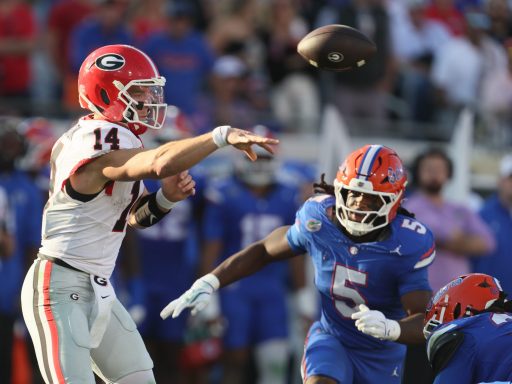
Florida football has a test ahead. The Gators’ defense may bear the brunt of it.
Defensive coordinator Brad White has a difficult history against No. 3 Georgia (6-1, 4-1 SEC). In eight seasons with the Kentucky Wildcats, White went 0-7 against the Bulldogs. No. 17 Florida (5-2, 3-2 SEC) can only hope that fortune changes Saturday.White emphasized that Saturday’s game is about the team, not his personal history.
“I want to win every game we play,” White said. “But it’s not about me. I just want this defense to continue to grow because I know what they can be.”
Florida’s defense has grown since the start of the season. Despite inconsistency and mistakes through its first six contests, the unit turned in a stronger performance in Texas, holding the Longhorns to 272 total yards and 2-for-10 on third down. That may give Florida’s defense momentum to going into a challenging SEC opponent.
“We definitely needed [the win],” linebacker Myles Graham said Tuesday. “We knew that was how we could play…we showed flashes, but we didn’t put together a whole game yet. We needed that so we could build on it for the rest of the year.”
As Graham noted, the key will be sustaining that level of play Saturday.
Georgia’s offense will make that difficult. The Bulldogs rank third in the SEC in both rushing (197.71) and passing offense (272.14). Their production ranks second in the conference in total offense. Quarterback Gunner Stockton leads the unit and ranks second nationally in passing efficiency with 1,570 passing yards, 16 touchdowns and four interceptions this season.
Despite coming off a 27-24 loss against Auburn this past Saturday, marking their first defeat this season, Georgia remains a formidable test. White pointed to Stockton’s ability to move past mistakes as one of the offense’s strengths.
“You have no doubt that he’s going to be able to put that behind him,” White said of the quarterback. “Everybody on that offense believes in him … I was able to face him last year, I know what he can do.”
As for Florida’s offense, the challenge is similar. However, their biggest question heading into the weekend isn’t necessarily whether they can produce, but who will lead them on field
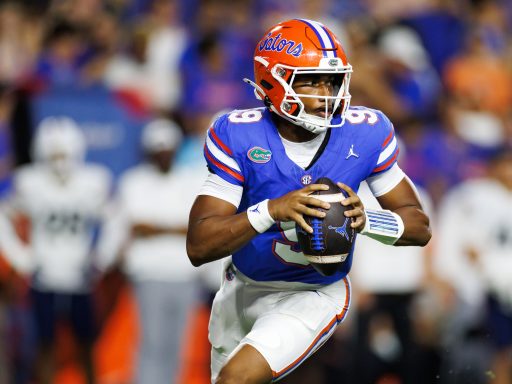
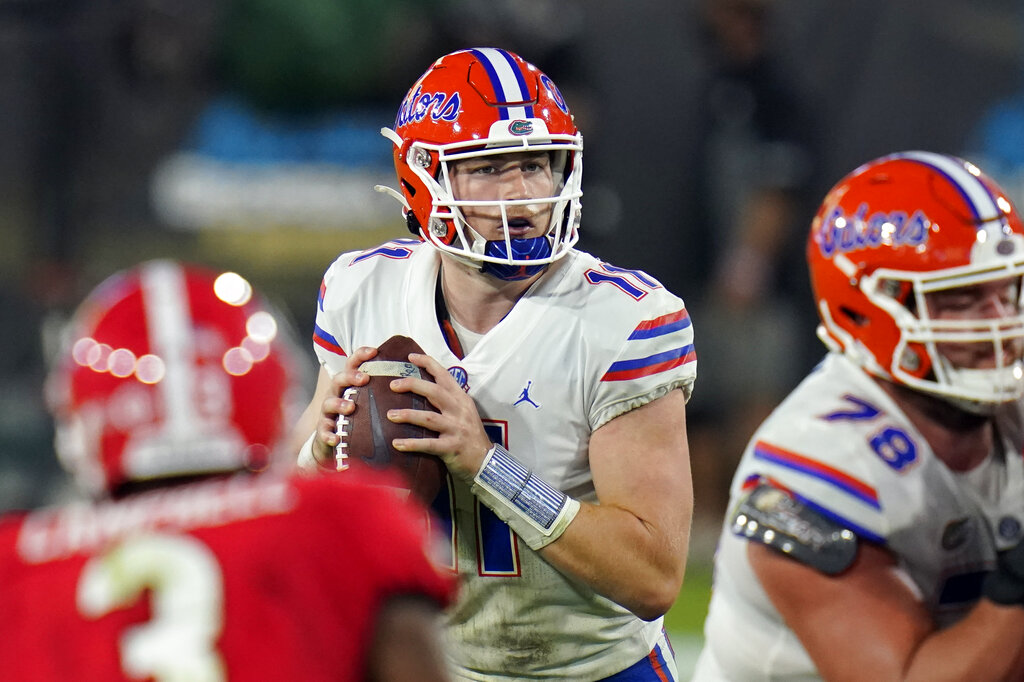
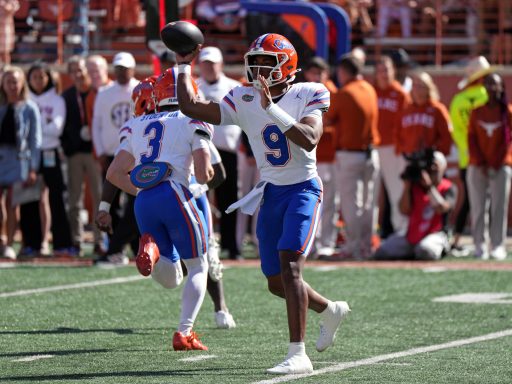
Florida’s injury report featured several key players ahead of its Oct. 17 victory over Texas, including starting quarterback Aaron Philo. Philo suffered a shoulder injury before the game, opening the door for Tramell Jones Jr. to start. Jones completed 22 of 35 passes for 155 yards and two touchdowns, helping lead Florida to an upset road win. Now, with Georgia next on the schedule, the Gators’ starting quarterback remains uncertain.
During Monday’s availability, coach Jon Sumrall downplayed the need to make an early decision, saying the offense wouldn’t change regardless of who started. Wide receiver Eric Singleton Jr. echoed the statement on Tuesday.
“I’m confident in whoever comes out there Saturday,” Singleton said. “I just hope they’re ready to throw it deep.”
Another focus for Florida’s offense will be staying grounded. The Florida-Georgia rivalry brings more than an anticipated on-field matchup; it also carries the usual SEC fanfare and heightened expectations.
For a Gators team with several Georgia ties, the game may feel especially personal. Four players joined Florida from Georgia Tech’s offense, and offensive coordinator Buster Faulkner coached the Yellow Jackets from 2023-25. Still, Florida’s approach remains the same as it has throughout the season: go 1-0 every week.
“It’s about execution,” Faulkner said Tuesday. “Don’t make it bigger than it is. Playing the game for a long time, it’s still the same game. Don’t forget it’s a game.”